Donovan, Campbell, & Nix on the end of Burn Notice
By Jamie Ruby
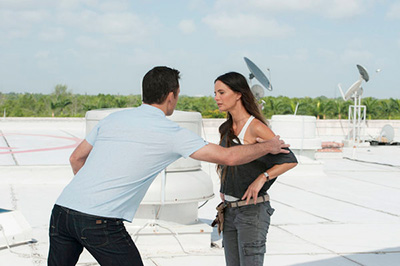
 Tomorrow night marks the end of a television era as USA Network's hit television series Burn Notice draws to a close. In the explosive series finale, Michael Westen, played by Jeffrey Donovan, even if he cannot forgive himself, will need to regain the trust of his friends to finish what he started. However, lives will be risked and sacrifices will be made. Is Michael willing to pay the ultimate price to get what he wants?
Jeffrey Donovan, Bruce Campbell (Sam Axe), and creator and executive producer Matt Nix recently talked to the media about the series finale and the possibility of quite a shocking ending.
Donovan talked to SciFi Vision about how ingrained Michael's desire to do anything to help others is, and if he could walk away from it and settle down. "I think that what is displayed in the last episode is who (Michael is).
"And the kind of ambiguous nature of a spy is always going to lend itself to the question of is he honest about choices he makes or is it for God and country or whatever, you know, the statement might be.
"But I think that, you know, you can take Michael out of Miami and out of the CIA, but I don't think you can ever take the hero out of Michael. And I know that sounds corny but I think that when Michael is put in a situation where he has to save someone, he'll never walk away from that situation.
"But if he had a choice professionally as far as career I think he could walk away from his job with the government."
Campbell told SciFi Vision about what he had learned since starting to work on the series. "You learn something basically every day, some way to spin something, some way to end a scene, some way to put a little button on something.
"So, you know, you're always thinking. And we're grateful to Matt and the writers for being, you know, fluid with our inabilities in certain cases and poor memory and stuff like that.
"So, you know, we learned how to survive. Here's what it is. We learned how to do this show in seven days and that's a lot to learn. That's a big learning curve."
Nix added his own thoughts. "I'd say for me that what I really learned was that sort of how far or what I sort of had creatively when I was pressed. You know what I mean like because the way the show was done and it wasn't just the schedule, though that had a lot to do with it, but it was, you know, having Jeffrey call up and say, you know, I don't think this scene is working. I think we should do this a different way. Or I want this out because...
"And it just feels like, you know, you're like being challenged by the actors and finding that even when I really didn't feel like I could do it, like I didn't feel like I had the answer, that if you just sort of trust yourself and, you know, reach inside yourself or, at least my experience was, you know, just kind of trusting the process and going like, "Okay, well this is going to work out. It's going to be challenging and I'm going to have to figure something out."
"And if I dig deep and I'm willing to take a risk and, you know, then we're going to find something fun. And at the beginning of the series there was always this panic. Like everything was going to fall apart.
"And by the end, you know, I felt like I sort of learned how to do that. You know and just trust that we could make something cool if we all kind of knuckled down and worked together and breathed deeply through the panic."
USA Conference Call
Burn Notice
Jeffrey Donovan, Bruce Campbell and Creator/Executive Producer Matt Nix
September 4, 2013
3:00 pm ET
QUESTION: We just learned that a major character is going to die in the finale. And I’m wondering what Jeffrey and Bruce would say to fans to prepare them for this information.
BRUCE CAMPBELL: Jeffrey. Don’t eat Chinese food before the episode.
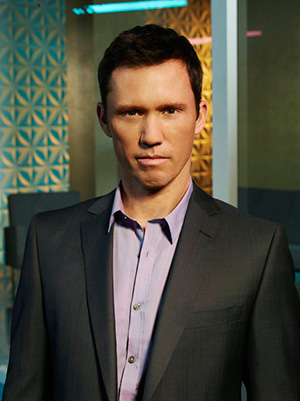 JEFFREY DONOVAN: And my answer would be there’s nothing that can prepare them.
QUESTION: Why do you think that ending works for this series?
BRUCE CAMPBELL: One of the interesting journeys that Burn Notice has been on is it created a family for the audiences to watch. And though we’ve been humorous throughout the years there’s always been an underbelly of seriousness and tragedy.
And I don’t think we could probably end the series with a bow tie and smiles on everyone’s faces. I think that the audience knows there has to be some sort of tragedy to show how important their journey was over the years.
JEFFREY DONOVAN: And I believe it’s called collateral damage. Once you have a group of people who have put their lives on the line every single week it’s hard to maintain that.
And then the specifics, of course, would be better answered by Mr. Matt Nix.
MATT NIX: It’s a question for you guys. But I think one of the central ideas and conflicts in this series has always been between Michael’s work and Michael’s family.
And he started this series as a very isolated guy. And over the years he has acquired this family and these friends and these relationships that he didn’t have at the beginning.
But we’ve always talked about the idea that there’s a reason that a spy who’s putting himself in these kinds of situations so consistently doesn’t have a bunch of close relationships.
And I think that it was important to me to say why have the last seven years mattered? Are those themes that we’ve addressed over the years, are they real? And I think the answer to that has to be yes. And so Michael’s always had to balance the two sides of his life and the final two episodes are really about choices and sacrifices.
And it’s not just about being (fat) or killing off the character. It’s also about taking seriously the things that we’ve talked about and the issues that we’ve addressed over the last seven years.
QUESTION: Matt, the way that you’ve wrapped up the show here this season, how does that align with your original idea for ending this series? Is it pretty much on the same page or were there pages you used from your original plan in previous season finales?
MATT NIX: Both, really. And the kernel of the idea which I would really say is this season and what Michael has been going through this season and dealing with James Kendrick and his organization, that was in my mind from maybe not the pilot but as soon as I - that first year I had a sense that we needed to land in a place that wasn’t just about Michael fighting another bad guy but was really about Michael wrestling with the demons and himself.
And tempted in a way to become the very thing that destroyed him in the beginning of the series. You know, the people that burned him were in an organization operating outside of an established political structure and doing their own thing who felt that they were doing the right thing but Michael was collateral damage. And it’s an easy thing to become that if you’re not careful if you’re doing the sorts of things that Michael does.
And so that seed was always there. But at the same time over the course of seven years you discover new things and I’d say that the emphasis on the team and the way the family came together in the show that was a much bigger element than I anticipated at the beginning of the show, if that makes sense.
QUESTION: This week’s episode kind of left Michael in a real pickle there at the end of the last episode. He had to basically break cover in order to save Sonya’s life. What can you possibly tease about how he gets out of that? Is he about to launch into a big spiel of fast talking or...?
MATT NIX: Actually I think that people will be surprised. The ending of this season, the way that Michael deals with Kendrick and his organization, fast talking is what Michael did in virtually every other episode of Burn Notice. And part of what makes Kendrick a formidable ally and opponent is that he’s not a hypocrite. He really believes in what he’s doing. When he says we don’t leave men behind, they don’t leave men behind. When he says he’s more committed to this organization than to anything else, he believes that.
And so I don’t think I’m giving anything away by saying Michael does not die at the end of Episode 11. But it’s not simply weaving another little web of lies. It’s a very different turn for Michael which I think will surprise some fans. And I think it’s ultimately all about addressing these themes that have emerged over the years, and these elements of Michael’s character.
QUESTION: Matt and Bruce, the season has been very emotional for all of the characters with Michael so separated for most of them. But one of the fun aspects of that has been that we’ve seen Sam and Jesse become this really great team.
Is there any thought to maybe a spinoff with those two characters?
JEFFREY DONOVAN: I guess that’s probably a Matt Nix question.
MATT NIX: There’s certainly a lot of thought on Bruce’s and my part. Let me put it this way: it’s something that we have kicked around and it’s an idea that we’ve liked.
And obviously three guys don’t get together and make a television show in their garage. If the opportunity ever arose [to] do something like that, then that’ll be really fun. But there’s nothing specifically in the works other than that we all think it would be fun to do if the opportunity ever arose.
QUESTION: And Bruce do you agree?
BRUCE CAMPBELL: I do. I do. Yes, it’d be a different show. It’d be something that I know that I would enjoy. And I enjoy working with Coby because it would just be a whole different kind of dynamic. It’s been really great working with Donovan.
But this is all bologna. There’s really nothing to talk about right now other than the fact that it’d be fun. But you really do have to jump through a lot of hoops to get a show on the air. So right now it’s really just a bunch of random Twitter talk.
MATT NIX: I will say though just in terms of the - and just really quickly, in terms of what’s gone on this season, one of the really fun things about working with all of the actors is the things that they bring to the role that influence the direction that the series goes.
So when you talk about like this has been a really emotional season, that has a lot to do with my conversations with Jeffrey and him saying, “I really think that we’re going to a more emotional place.” And I want to address that. And it’s been an opportunity for me to and the other writers to embrace that and run with that.
And that’s really, it’s a team effort. But it’s really a credit to Jeffrey that that was something that he was bringing out.
And in the case of Bruce and Coby, I actually say you can just see it in the writers, you put those two characters together and they’re really funny and the scene just pops. And inevitably in the next episode somebody is thinking of something to do and they’re like, “Oh, maybe we put Sam and Jesse together.” And it’s a credit to both of you guys, Bruce, that that just emerged. It wasn’t like anybody sat down and said, “Let’s make Sam and Jesse this fun team.” It was really just every time you put them on...
BRUCE CAMPBELL: Well I appreciate that.
MATT NIX: ...the screen that happened.
BRUCE CAMPBELL: As you know, Coby Bell is very difficult. That’s a well-known thing within the industry, his temperament and his - well frankly, anger issues.
MATT NIX: But I don’t know how you dealt with it.
BRUCE CAMPBELL: Well, we’ve overcome. And no, sometimes you turn tragedy into triumph. And I think that’s what we try to do. The fart jokes. The little trumpet singing he does, all of...
MATT NIX: That can sometimes break through the dark miasma that is rolling in his universe.
BRUCE CAMPBELL: Yes. I think that thoroughly answers that.
QUESTION: So by my count Burn Notice filmed the same number of episodes as Miami Vice did, 111. And obviously it’s been a huge boost to the local production industry. And I’ve gotten a lot of feedback from people in the industry who blame part of the reason there’s not a season on the loss of the Coconut Grove Convention Center.
And I was hoping Matt, could you talk about that in terms of the prospects for an eighth season and whether any local production issues came into play there?
MATT NIX: Ultimately, no. It would have been a pain in the butt to find a new place, but I don’t think you decide to make or not make a series on the basis of whether the stage spaces are available.
So there were a lot of factors that went into it. But a lot of them were just creative. And when you’re making a series you really have a choice. You can either end it on your own terms, in which case you will be invariably ending it what feels like a little early. Or you can end it when you get yanked off the air, in which case you will invariably be ending it a little bit late.
And so between the two of those, there are obviously positives and negatives, but I think that everybody - we were all, I think, very happy this season, when you know you’re ending. You think about loss, like they asked for an end date so that they could bring things to a close. And once we had a sense that this was going to be the last season we were able to do a new kind of storytelling and the kind of storytelling that I’m really proud of.
So yes, it wasn’t like we were like, “Oh well, fine. If you’re taking away the Convention Center we’re taking our football and going home,” not at all so.
QUESTION: Is there anything that you guys wanted to do on the show that you couldn’t for whatever reason, in terms of character, stunts or whatever?
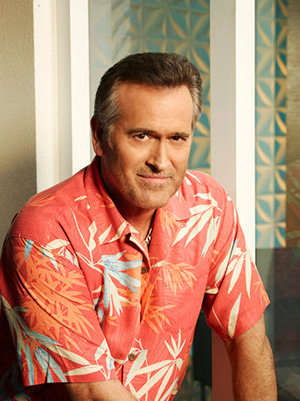 BRUCE CAMPBELL: That’s a good question. Jeffrey, what did you want to do?
JEFFREY DONOVAN: Well, I’m a private pilot. And I fly a (Cirrus), which is an unbelievable plane. And I wanted to actually shoot a scene where you don’t cut so you know it’s me. And I actually fly me and Bruce or something like that, or me and my mom, to safety. And the camera is on us. And you see us actually be flying.
I really wanted to do that. But we never got to do that.
BRUCE CAMPBELL: I agree. I think Jeffrey and my stunt double would have done just a great, great sequence.
JEFFREY DONOVAN: Gee, thanks Bruce.
BRUCE CAMPBELL: I roller skate like a mother scratcher. And I’ve pressured Matt, what do these people do in their off season, when they’re not working? I can never sell that. I tried it eight different ways, seven different seasons, never got in.
So I’m going to make a YouTube video and I’ll be done with it.
MATT NIX: But you wanted to bowl as well. Are you actually a good bowler?
BRUCE CAMPBELL: Well bowling, yes, bowling, that was just one thing.
JEFFREY DONOVAN: He’s not a good bowler. You would need your stunt double for that, Bruce.
BRUCE CAMPBELL: Yes, I’d say Jeffrey you also wanted to have an episode where you played a full 18 holes of golf on screen.
JEFFREY DONOVAN: Exactly.
BRUCE CAMPBELL: We were unable to do that.
JEFFREY DONOVAN: (Sold my soul) (unintelligible) in four and a half hours. It was an 18-hole match.
MATT NIX: For me that’s a hard question to answer just because I have a book of the Burn Notice episodes that I was never able to do.
One thing actually though, just being in Miami there are certain things that just seemed totally logical to do, but for various reasons are almost impossible to do. So a boat chase, you need like six boats to actually do a boat chase so that you have boats on cameras and then this boat and that boat and three water safety crews.
And once you actually get into the logistics of doing a real boat chase, it seems like the most natural thing in the world to do on Burn Notice, but it was something that we - we did pieces of boat chases and little stuff. But we never actually were able to do that kind of thing.
And also we always joked that we had a - on Burn Notice just because of our production schedule we were given special versions of the screenwriting software that would not allow us to write the word “night” because we can almost never shoot anything at night.
So if you watch Burn Notice, whenever it’s night they’re almost always inside, so that was...
QUESTION: I think lost you for a second there. I have one more follow-up question which is for a show like this or any show that features a hero, is it possible for the hero to have a happy ending?
JEFFREY DONOVAN: Yes, thank you. I would say that if you’re telling a real story, and you think about any classical story the ending will have both triumph and tragedy in it. You know what I mean? I think if you’re just telling a story that has a sad ending, then that’s a bummer. That’s usually not why we go turn on the TV or go to movies or whatever or read books.
At the same time if it is just happy then it really feels like the story doesn’t have any weight or consequence. And so I think that it’s always got to be a mixture of those two.
QUESTION: Oh I’d like to go back to Jeffrey and Bruce and ask what has the show meant to you?
JEFFREY DONOVAN: I’m not - it’s kind of a general and vague question. Can you be more specific?
QUESTION: Well, what does it mean to you and your career? What has it done for you? What stands out from you over all the seasons?
JEFFREY DONOVAN: I don’t know. Bruce, why don’t you take that one?
BRUCE CAMPBELL: It was a great gig is what it was. You know actors - there’s so many levels to being an actor. One is trying to get in your local community theater play. Sometimes that doesn’t even work.
Sometimes you get in a local commercial and you’re happy because you nailed that. Sometimes it’s you’re great just because you’re happy to get an agent. And then once you get the agent can they get you better jobs? Then if they get you better jobs can you actually get those jobs?
Burn Notice was a case where it was not just something that got picked up or ran one or two seasons. It got picked up and was successful right from the go get. And pretty much we had seven strong seasons.
So it’s the equivalent of a grand slam home run. So Jeffrey and I, I know we can each put that on our resume. Same with Matt Nix and anybody else who worked on the show that they worked on one team that won the World Series.
And we’ll always have that on our resume. And you can’t take that away from us. And frankly it makes up for a lot of the stinkers that we’ve all had in our career.
QUESTION: Jeffrey, anything you want to add?
JEFFREY DONOVAN: I agree with that.
BRUCE CAMPBELL: I will add one little thing though. And I know you can still at least hear me I think, is that when you work on a show for seven years you meet a lot of great actors, a lot of great writers, a lot of great directors and producers.
So it’s really given us all a database in our heads of people that would be kind of fun to work with in the future. And normally you wouldn’t get that if you weren’t spending a long time on a show.
QUESTION: Was there any memorabilia that each of you took that was special to you at the end of the finale?
JEFFREY DONOVAN: I took one (unintelligible).
BRUCE CAMPBELL: Is anyone from Fox listening? Yes, that’s...
I know that I paid for some things.
MAN: What did you buy?
MAN: Didn’t you get some shirts?
BRUCE CAMPBELL: I bought the best of the best of the shirts that had the best patterns, that I liked the best. I bought my jewelry which I found out was the most expensive part of purchasing that because they actually wound up making them gold after about the third or fourth season so I was like wow, those are expensive. They’re like, yes we thought we had gold instead of a cheesy plating.
But the most important thing I wanted was a Sam Axe notebook. It’s a spiral notebook. Sam is a little more old school where he does jot down actual notes when he’s listening to people talk on the phone. So I have a spiral notebook that throughout the last five years of the show that I used that I put dates. Every time I did a little notepad, I put the dates on it.
And so to me it’s a little Smithsonian piece that I’m going to keep. It means absolutely nothing to anyone. And that’s why I like it.
MAN: That’s really cool.
JEFFREY DONOVAN: I - no. I wanted a chair for my lawn.
BRUCE CAMPBELL: You didn’t get that?
JEFFREY DONOVAN: It was a little green chair that had kind of a silver railing to it, arm rail to it.
BRUCE CAMPBELL: Yes, it’s club chair. It was a...
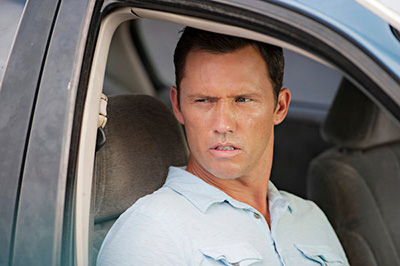 JEFFREY DONOVAN: And it was a really great chair. And I must have sat on it for seven years. And when I went to the head dresser and I said, “Yes, I’d like to buy that chair. Where is it?” I was informed that it was never Burn Notice’s. It was actually a set decorator’s chair. He lent it to the show. And when the show’s over he took it back.
BRUCE CAMPBELL: Oh wow.
JEFFREY DONOVAN: So I didn’t know that my living room on one of the most successful TV shows in USA Cable’s history was a loaner.
So that was the only thing I wanted. But no one knows that I actually own and possess one of the most iconic things that was actually on the show. But I owned it from the get go and that was my original Oliver Peoples aviators. When we shot...
BRUCE CAMPBELL: Oh those were yours?
JEFFREY DONOVAN: ...the pilot those were my sunglasses. And when…
BRUCE CAMPBELL: See I didn’t know that.
JEFFREY DONOVAN: ...offered a choice that was cleared, I didn’t like any of the glasses. So I said I’d like to use my own and Matt said, yes, that’s fine with me.
And so we shot the pilot with my own. Then when the series was picked up they got a replica of it and changed the lenses so that they would be less reflective. But the original Michael Westen sunglasses are in my possession. And obviously I don’t wear them anymore because they’re too iconic and I’d get bothered everywhere I went. But I’ll always hold onto those forever.
BRUCE CAMPBELL: I also say call sheets. Those are the little daily worksheets that has a list of who worked that day and what scenes you’re doing and where you are. So I save them like once a week so I know I have a good document of all the actors that came and went. It’s just a fun little record.
MATT NIX: Well, that’s a good idea.
I can creep you out actually with what I have, Jeffrey. I actually did not realize this until the last episode, but Jeffrey and I are the same suit size and shoe size. So I was hanging around with one of our (costume) (unintelligible), and he kept bringing - like I needed shirts for something. They were doing interviews or something.
And he kept bringing me shirts. And I realized at a certain point, “Wait, these are all Jeffrey shirts, I’m wearing Jeffrey’s wardrobe, right?” And he’s like, “Yes, it doesn’t really matter because he’s done with that scene and he doesn’t need this shirt anymore.”
And he kept bringing them. And I was like, “Wait a second, what size suit is he?” And he was like, “Oh, he’s 40 regular.” I was like, “And what waist size, inseam?”
I’ve got to get them taken in a little bit but I got four of the - I got the tan suit. I got four of the iconic (unintelligible).
JEFFREY DONOVAN: You got the official Michael suits.
MATT NIX: Yes because I was like, “Well, they’re good suits. And there’s no sense not taking them”. And a bunch of shoes so I guess I’m going to have to wear suits around all the time now.
But I was like yes, the tan suit, that’s a good thing to have. I’ll take it.
QUESTION: Now you have your own Halloween costume. You have a Halloween costume for the next few years.
MATT NIX: Yes exactly, totally.
QUESTION: And what’s next for you and Bruce, Jeffrey? What’s next for you?
JEFFREY DONOVAN: I’m resting. I’m resting. Bruce?
BRUCE CAMPBELL: You know, we’re actors that were fortunate enough to work before Burn Notice. Hopefully we’ll be fortunate enough to work after.
So there’s a bunch of stuff floating around but anything I mention today would all be bologna because it can’t be confirmed.
QUESTION: Jeffrey, when we spoke before and you speculated about whether there would be a seventh season, you imagined that Michael was going to have to go a dark place. Now that you’ve actually done that I’m wondering what that process was like for you as an actor.
JEFFREY DONOVAN: I was right about something? Holy shit.
Yes. I think that the reality of the season was a lot harder than I imagined. And I give Matt and his team of writers a lot of credit for taking not only the audience but me the actor down a path that was incredibly difficult.
One of the things that Matt and I have always talked about was what’s underneath, when you peel away these layers of the onion, what’s at the core of Michael, and that journey was in the seventh season. And what we find is a - I’m not trying to be funny but it’s a frightened little boy. And I’m not sure if I even knew that when I started the pilot with Matt.
But no, with anything the seven-year marriage with Matt and writers, it was a world of discovery that was really just an incredible joy to pursue.
And a lot harder I think to pull it off in the end. It certainly tested my abilities. And I think that Matt might even feel like it tested his ability but I think when you push yourself to create something that you’ve never done before, if you do it right I think you can pull something off pretty magical. And that’s what I feel like we pulled off, something magical for our final season.
QUESTION: And Bruce, what do you think about the fact that Sam has sort of become the responsible one in that group? Does that surprise you?
BRUCE CAMPBELL: I like it. Because reporters, the first couple seasons were like, “So you’re the guy that rats on Mike.” I’m like, “Shut up with that already. He’s done with that.” You know, characters grow. Sam was worried about his pension. You would be too.
So yes. Nice to have him - any character grow from the fun loving guy to the guy who actually really is concerned for everybody.
And everybody has their own moral strength. I’m glad to see that Sam had a pretty good moral core. He knew when something was really bad and that it’s a gut feeling. And everybody has it.
So I think each character at one point or another was there to help, it takes a village to raise a spy so I think that’s kind of the theory.
QUESTION: What will each of you miss the most about working on the show and what will you miss the least?
MATT NIX: I think the thing that I’ll miss the most is just there’s this opportunity - as a writer, you get struck by some idea or something you want to do or whatever.
And when you’re running a show like Burn Notice, we’re really able to do a new kind of thing each week. There was always going to be action in it. There was always going to - it’s the same characters.
But one episode could be on an island and dealing with a bunch of guys, bunch of mercenaries and the next thing could be in the middle of the center of a city and very intimate. And could do something where they’re all locked in one building or all sorts of things. And the opportunity to just come up with an idea and then make it happen, even if I were to do another show it’s hard to picture having another show with that kind of narrative freedom.
And also just the opportunity to write these characters that I’ve come to know so well. So I’ll miss that enormously.
I think the thing that I’ll miss the least is the - and this probably true for everybody, just the schedule of banging out an episode of Burn Notice every week is pretty punishing and for everybody.
And our episodes were always so overstuffed. And I think that’s one of the things that made us successful but it was also something that made it very hard on the actors and on the writers because every - can be told every single week. Ah yes, we can’t do this episode. And then, I mean by people who were doing their jobs, and then realize okay, we got to cut this. We got to figure this out. We got to do that. It was a tough process. So it’s two sides of the same coin really.
JEFFREY DONOVAN: I’m going to miss the most my salary.
MAN: For once an honest answer.
JEFFREY DONOVAN: How much it just gave me pleasure. How it just (unintelligible). And a ton of it every week on the seventh and on a hit show that is global.
MAN: Nice.
JEFFREY DONOVAN: The thing I’ll miss the least, there’s - every actor has his own or his or her own idiosyncrasies and mine was, to be quite frank, I - we all knew how hard the show was since the beginning. And we knew how difficult it was to pull off, like Matt said, weekly.
So the thing that was the most difficult was always some new guy that just showed up and said, “I love your show. I can’t wait to work on it.” And then they showed up. And we said, “Hey, it’s going to be a lot harder than you think.”
And on the first day they underestimated how difficult. And by the end of the day you’re puffing them full of fluids. And you’re putting ice packs on the back of their neck because they’re literally dying from exhaustion.
So the hardest thing to always watch was anyone who ever thought that this show was easy to do because you watched it. And then seeing them just fail miserably on their first day, but then on the second day we all picked them up and we gave them a slap on the back and said, “You can get back in there.”
And they always fulfilled the commitment but that was always the hardest thing, initiating the uninitiated.
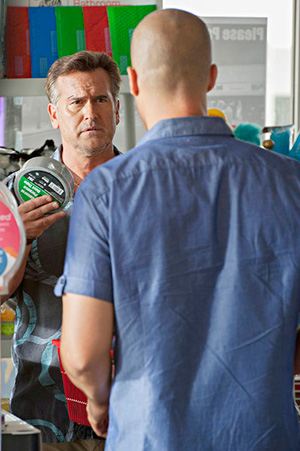 BRUCE CAMPBELL: I would say I miss most the unique nature of the show because I swore on a deck of bibles that I would not do a doctor show, a lawyer show or a cop show because they drive me insane. And I would hang myself in my trailer season two if I did those types of shows. It’s just the way I’m wired.
I like Burn Notice because it wasn’t any of those shows. We’re cops but we’re cooler than cops where we help people. We save lives but we’re not boring like doctors are boring. And the most boring of all is a lawyer who deals with legal stuff all the time. We deal with legal stuff every single day. We break laws every single day on Burn Notice but we never do anything wrong.
And there’s very few shows that were like it. I’m referring to it in the past tense now.
So I will mostly miss that because it’s going to take a while to find another gig that is as interesting and complex and not boring.
I won’t miss the heat.
QUESTION: I thought you guys were going to say yogurt would be the thing you’d miss the least.
JEFFREY DONOVAN: Oh no. It’s like a commercial. You know, you take a bite and spit in a bucket.
SCIFI VISION: Not knowing what happens, I’m curious, do you guys think that Michael can ever walk away from the life he has, even if he has the choice and he can settle down and all that? Is that in him or is it ingrained in him to be the way he is and be helping everybody and doing this kind of job?
JEFFREY DONOVAN: Have you seen the last two episodes?
SCIFI VISION: No, I have not.
JEFFREY DONOVAN: I think Matt appreciates how difficult a question that is. I think that what is displayed in the last episode is who (Michael is).
And the ambiguous nature of a spy is always going to lend itself to the question of is he honest about choices he makes or is it for God and country or whatever the statement might be.
But I think that you can take Michael out of Miami and out of the CIA but I don’t think you can ever take the hero out of Michael. And I know that sounds corny but I think that when Michael is put in a situation where he has to save someone, he’ll never walk away from that situation.
But if he had a choice professionally as far as career I think he could walk away from his job with the government.
MATT NIX: Yes. I agree. I think that a big (unintelligible), particularly in the last (unintelligible) what he does. Like what is the nature of that compulsion.
And as you go back to the origins of the series, it was always (unintelligible). And our (take) from that got more and more as we (unintelligible) well it’s not that he’s a nice guy. Something’s going on with this guy that he’s constantly putting himself in danger for all sorts of reasons he doesn’t (unintelligible).
Where does that (unintelligible)?
JEFFREY DONOVAN: Hey Matt, I don’t know if you know this but you’re breaking up. I think you might be on a (cell phone).
MATT NIX: Oh sorry. Can you hear me now?
JEFFREY DONOVAN: I only heard about every fourth word.
SCIFI VISION: Yes, me too.
MATT NIX: Yes. I agree with what Jeffrey said in that case, if you can’t hear me.
JEFFREY DONOVAN: Just put quotes around my quote and then attribute it to Matt.
MATT NIX: Yes, exactly. Yes, perfect.
SCIFI VISION: What do you think that you’ve learned most about yourself since starting the show?
JEFFREY DONOVAN: Have you learned anything, Bruce?
BRUCE CAMPBELL: Oh boy. No. Things that I suspected just came true.
JEFFREY DONOVAN: That I’m an amazing actor.
BRUCE CAMPBELL: Yes. Yes, that all that surprised me. Yes, of course. You learn something basically every day, some way to spin something, some way to end a scene, some way to put a little button on something.
So you’re always thinking. And we’re grateful to Matt and the writers for being fluid with our inabilities in certain cases and poor memory and stuff like that.
So we learned how to survive. We learned - no, here’s what it is. We learned how to do this show in seven days and that’s a lot to learn. That’s a big learning curve. And I want to find the idiot who did the first episode in seven days because I’m going to kill him.
JEFFREY DONOVAN: I think that would be Matt.
BRUCE CAMPBELL: No. No, somebody broke that precedent. All the other shows I did were eight days to do the same amount.
MATT NIX: Eight days, yes.
BRUCE CAMPBELL: And some genius came in and said, “I can do it in seven,” so I want to find that person.
MATT NIX: I’d say for me that what I really learned was what I had creatively when I was pressed. Because the way the show was done - and it wasn’t just the schedule, though that had a lot to do with it, but it was having Jeffrey call up and say, “I don’t think this scene is working. I think we should do this a different way.” Or, “I want this out because (do this) or having Bruce.”
And it just feels like you’re like being challenged by the actors and finding that even when I really didn’t feel like I could do it, I didn’t feel like I had the answer, that if you just trust yourself and reach inside yourself or at least my experience was just trusting the process and going, “Okay, well this is going to work out. It’s going to be challenging and I’m going to have to figure something out. And if I dig deep and I’m willing to take a risk and then we’re going to find something fun.”
And at the beginning of the series there was always this panic. Like everything was going to fall apart. And by the end, I felt like I learned how to do that and just trust that we could make something cool if we all knuckled down and worked together and breathed deeply through the panic.
QUESTION: You have an amazing series of cast members over the years. Can you guys talk a little bit about who your favorites were and why?
MATT NIX: I have tons of favorites over the years. And there were a lot of really (unintelligible) actors. The people that I tend to think about the most in terms of guest cast were the big foils to Michael. Because those were always, like for a one episode fill-in might be or guest actor of any kind might be interesting. But you’re not generally exploring a character over time, that kind of thing.
And we were lucky to get Garret Dillahunt to play Simon was a really fun one. Jay Karnes, who played Brennen, came back a number of times. Tim Matheson, who played Larry.
You know the opportunity sort of to explore villainy less as a dramatic conceit and more in terms of character, like who are these guys? What motivates them? Tricia Helfer who played Carla in the second season was magnificent.
I’m leaving a bunch of people out. But those - actually JP, who plays James in this season, also has done a great job.
So really exploring those motivations and going on that journey with an actor. And we’ve been blessed to have a lot of great ones.
What about you guys?
 JEFFREY DONOVAN: Yes, Jay Karnes, only because it was the first time Matt had ever written a character that was smarter than Michael. And that was always the precedent, that no one in the room was ever smarter than Michael Westen.
And Matt wrote a character that was smarter than Michael. But his ego got in his way, which was his downfall.
But I love Jay Karnes. But as far as craziest villains, Garret Dillahunt. His Simon, the tweets that I read about how - what a great thing to bring him back and then what a clever thing that Matt and the writers did about ending - spoiler alert! - his life.
And showing what Michael can be as a monster was just a great flag in the history of Burn Notice.
BRUCE CAMPBELL: The great Jack Coleman as well. You know, playing the conflicted CIA guy. I just enjoyed Jack so much, mostly as a person but his character was a lot of fun to watch because things were happening left and right around him and he was always, “Get Langley on the phone!” He was always mad.
So we’d show up on set and go, “Hey, are we going to hell at each other today?” He’s like, “Yes, I think we are. Let’s do it.”
And John C. McGinley was very good. And you’re right, Tim Matheson was definitely one of the best. Larry was a great recurring, just really troublesome bad guy.
And I think for actors bad guys are sometimes - those are the best parts to play because you can really chew it up. And Tim Matheson certainly did.
Tomorrow night marks the end of a television era as USA Network's hit television series Burn Notice draws to a close. In the explosive series finale, Michael Westen, played by Jeffrey Donovan, even if he cannot forgive himself, will need to regain the trust of his friends to finish what he started. However, lives will be risked and sacrifices will be made. Is Michael willing to pay the ultimate price to get what he wants?Jeffrey Donovan, Bruce Campbell (Sam Axe), and creator and executive producer Matt Nix recently talked to the media about the series finale and the possibility of quite a shocking ending.
Donovan talked to SciFi Vision about how ingrained Michael's desire to do anything to help others is, and if he could walk away from it and settle down. "I think that what is displayed in the last episode is who (Michael is).
"And the kind of ambiguous nature of a spy is always going to lend itself to the question of is he honest about choices he makes or is it for God and country or whatever, you know, the statement might be.
"But I think that, you know, you can take Michael out of Miami and out of the CIA, but I don't think you can ever take the hero out of Michael. And I know that sounds corny but I think that when Michael is put in a situation where he has to save someone, he'll never walk away from that situation.
"But if he had a choice professionally as far as career I think he could walk away from his job with the government."
Campbell told SciFi Vision about what he had learned since starting to work on the series. "You learn something basically every day, some way to spin something, some way to end a scene, some way to put a little button on something.
"So, you know, you're always thinking. And we're grateful to Matt and the writers for being, you know, fluid with our inabilities in certain cases and poor memory and stuff like that.
"So, you know, we learned how to survive. Here's what it is. We learned how to do this show in seven days and that's a lot to learn. That's a big learning curve."
Nix added his own thoughts. "I'd say for me that what I really learned was that sort of how far or what I sort of had creatively when I was pressed. You know what I mean like because the way the show was done and it wasn't just the schedule, though that had a lot to do with it, but it was, you know, having Jeffrey call up and say, you know, I don't think this scene is working. I think we should do this a different way. Or I want this out because...
"And it just feels like, you know, you're like being challenged by the actors and finding that even when I really didn't feel like I could do it, like I didn't feel like I had the answer, that if you just sort of trust yourself and, you know, reach inside yourself or, at least my experience was, you know, just kind of trusting the process and going like, "Okay, well this is going to work out. It's going to be challenging and I'm going to have to figure something out."
"And if I dig deep and I'm willing to take a risk and, you know, then we're going to find something fun. And at the beginning of the series there was always this panic. Like everything was going to fall apart.
"And by the end, you know, I felt like I sort of learned how to do that. You know and just trust that we could make something cool if we all kind of knuckled down and worked together and breathed deeply through the panic."
USA Conference Call
Burn Notice
Jeffrey Donovan, Bruce Campbell and Creator/Executive Producer Matt Nix
September 4, 2013
3:00 pm ET
QUESTION: We just learned that a major character is going to die in the finale. And I’m wondering what Jeffrey and Bruce would say to fans to prepare them for this information.
BRUCE CAMPBELL: Jeffrey. Don’t eat Chinese food before the episode.
JEFFREY DONOVAN: And my answer would be there’s nothing that can prepare them. QUESTION: Why do you think that ending works for this series?
BRUCE CAMPBELL: One of the interesting journeys that Burn Notice has been on is it created a family for the audiences to watch. And though we’ve been humorous throughout the years there’s always been an underbelly of seriousness and tragedy.
And I don’t think we could probably end the series with a bow tie and smiles on everyone’s faces. I think that the audience knows there has to be some sort of tragedy to show how important their journey was over the years.
JEFFREY DONOVAN: And I believe it’s called collateral damage. Once you have a group of people who have put their lives on the line every single week it’s hard to maintain that.
And then the specifics, of course, would be better answered by Mr. Matt Nix.
MATT NIX: It’s a question for you guys. But I think one of the central ideas and conflicts in this series has always been between Michael’s work and Michael’s family.
And he started this series as a very isolated guy. And over the years he has acquired this family and these friends and these relationships that he didn’t have at the beginning.
But we’ve always talked about the idea that there’s a reason that a spy who’s putting himself in these kinds of situations so consistently doesn’t have a bunch of close relationships.
And I think that it was important to me to say why have the last seven years mattered? Are those themes that we’ve addressed over the years, are they real? And I think the answer to that has to be yes. And so Michael’s always had to balance the two sides of his life and the final two episodes are really about choices and sacrifices.
And it’s not just about being (fat) or killing off the character. It’s also about taking seriously the things that we’ve talked about and the issues that we’ve addressed over the last seven years.
QUESTION: Matt, the way that you’ve wrapped up the show here this season, how does that align with your original idea for ending this series? Is it pretty much on the same page or were there pages you used from your original plan in previous season finales?
MATT NIX: Both, really. And the kernel of the idea which I would really say is this season and what Michael has been going through this season and dealing with James Kendrick and his organization, that was in my mind from maybe not the pilot but as soon as I - that first year I had a sense that we needed to land in a place that wasn’t just about Michael fighting another bad guy but was really about Michael wrestling with the demons and himself.
And tempted in a way to become the very thing that destroyed him in the beginning of the series. You know, the people that burned him were in an organization operating outside of an established political structure and doing their own thing who felt that they were doing the right thing but Michael was collateral damage. And it’s an easy thing to become that if you’re not careful if you’re doing the sorts of things that Michael does.
And so that seed was always there. But at the same time over the course of seven years you discover new things and I’d say that the emphasis on the team and the way the family came together in the show that was a much bigger element than I anticipated at the beginning of the show, if that makes sense.
QUESTION: This week’s episode kind of left Michael in a real pickle there at the end of the last episode. He had to basically break cover in order to save Sonya’s life. What can you possibly tease about how he gets out of that? Is he about to launch into a big spiel of fast talking or...?
MATT NIX: Actually I think that people will be surprised. The ending of this season, the way that Michael deals with Kendrick and his organization, fast talking is what Michael did in virtually every other episode of Burn Notice. And part of what makes Kendrick a formidable ally and opponent is that he’s not a hypocrite. He really believes in what he’s doing. When he says we don’t leave men behind, they don’t leave men behind. When he says he’s more committed to this organization than to anything else, he believes that.
And so I don’t think I’m giving anything away by saying Michael does not die at the end of Episode 11. But it’s not simply weaving another little web of lies. It’s a very different turn for Michael which I think will surprise some fans. And I think it’s ultimately all about addressing these themes that have emerged over the years, and these elements of Michael’s character.
QUESTION: Matt and Bruce, the season has been very emotional for all of the characters with Michael so separated for most of them. But one of the fun aspects of that has been that we’ve seen Sam and Jesse become this really great team.
Is there any thought to maybe a spinoff with those two characters?
JEFFREY DONOVAN: I guess that’s probably a Matt Nix question.
MATT NIX: There’s certainly a lot of thought on Bruce’s and my part. Let me put it this way: it’s something that we have kicked around and it’s an idea that we’ve liked.
And obviously three guys don’t get together and make a television show in their garage. If the opportunity ever arose [to] do something like that, then that’ll be really fun. But there’s nothing specifically in the works other than that we all think it would be fun to do if the opportunity ever arose.
QUESTION: And Bruce do you agree?
BRUCE CAMPBELL: I do. I do. Yes, it’d be a different show. It’d be something that I know that I would enjoy. And I enjoy working with Coby because it would just be a whole different kind of dynamic. It’s been really great working with Donovan.
But this is all bologna. There’s really nothing to talk about right now other than the fact that it’d be fun. But you really do have to jump through a lot of hoops to get a show on the air. So right now it’s really just a bunch of random Twitter talk.
MATT NIX: I will say though just in terms of the - and just really quickly, in terms of what’s gone on this season, one of the really fun things about working with all of the actors is the things that they bring to the role that influence the direction that the series goes.
So when you talk about like this has been a really emotional season, that has a lot to do with my conversations with Jeffrey and him saying, “I really think that we’re going to a more emotional place.” And I want to address that. And it’s been an opportunity for me to and the other writers to embrace that and run with that.
And that’s really, it’s a team effort. But it’s really a credit to Jeffrey that that was something that he was bringing out.
And in the case of Bruce and Coby, I actually say you can just see it in the writers, you put those two characters together and they’re really funny and the scene just pops. And inevitably in the next episode somebody is thinking of something to do and they’re like, “Oh, maybe we put Sam and Jesse together.” And it’s a credit to both of you guys, Bruce, that that just emerged. It wasn’t like anybody sat down and said, “Let’s make Sam and Jesse this fun team.” It was really just every time you put them on...
BRUCE CAMPBELL: Well I appreciate that.
MATT NIX: ...the screen that happened.
BRUCE CAMPBELL: As you know, Coby Bell is very difficult. That’s a well-known thing within the industry, his temperament and his - well frankly, anger issues.
MATT NIX: But I don’t know how you dealt with it.
BRUCE CAMPBELL: Well, we’ve overcome. And no, sometimes you turn tragedy into triumph. And I think that’s what we try to do. The fart jokes. The little trumpet singing he does, all of...
MATT NIX: That can sometimes break through the dark miasma that is rolling in his universe.
BRUCE CAMPBELL: Yes. I think that thoroughly answers that.
QUESTION: So by my count Burn Notice filmed the same number of episodes as Miami Vice did, 111. And obviously it’s been a huge boost to the local production industry. And I’ve gotten a lot of feedback from people in the industry who blame part of the reason there’s not a season on the loss of the Coconut Grove Convention Center.
And I was hoping Matt, could you talk about that in terms of the prospects for an eighth season and whether any local production issues came into play there?
MATT NIX: Ultimately, no. It would have been a pain in the butt to find a new place, but I don’t think you decide to make or not make a series on the basis of whether the stage spaces are available.
So there were a lot of factors that went into it. But a lot of them were just creative. And when you’re making a series you really have a choice. You can either end it on your own terms, in which case you will be invariably ending it what feels like a little early. Or you can end it when you get yanked off the air, in which case you will invariably be ending it a little bit late.
And so between the two of those, there are obviously positives and negatives, but I think that everybody - we were all, I think, very happy this season, when you know you’re ending. You think about loss, like they asked for an end date so that they could bring things to a close. And once we had a sense that this was going to be the last season we were able to do a new kind of storytelling and the kind of storytelling that I’m really proud of.
So yes, it wasn’t like we were like, “Oh well, fine. If you’re taking away the Convention Center we’re taking our football and going home,” not at all so.
QUESTION: Is there anything that you guys wanted to do on the show that you couldn’t for whatever reason, in terms of character, stunts or whatever?
BRUCE CAMPBELL: That’s a good question. Jeffrey, what did you want to do? JEFFREY DONOVAN: Well, I’m a private pilot. And I fly a (Cirrus), which is an unbelievable plane. And I wanted to actually shoot a scene where you don’t cut so you know it’s me. And I actually fly me and Bruce or something like that, or me and my mom, to safety. And the camera is on us. And you see us actually be flying.
I really wanted to do that. But we never got to do that.
BRUCE CAMPBELL: I agree. I think Jeffrey and my stunt double would have done just a great, great sequence.
JEFFREY DONOVAN: Gee, thanks Bruce.
BRUCE CAMPBELL: I roller skate like a mother scratcher. And I’ve pressured Matt, what do these people do in their off season, when they’re not working? I can never sell that. I tried it eight different ways, seven different seasons, never got in.
So I’m going to make a YouTube video and I’ll be done with it.
MATT NIX: But you wanted to bowl as well. Are you actually a good bowler?
BRUCE CAMPBELL: Well bowling, yes, bowling, that was just one thing.
JEFFREY DONOVAN: He’s not a good bowler. You would need your stunt double for that, Bruce.
BRUCE CAMPBELL: Yes, I’d say Jeffrey you also wanted to have an episode where you played a full 18 holes of golf on screen.
JEFFREY DONOVAN: Exactly.
BRUCE CAMPBELL: We were unable to do that.
JEFFREY DONOVAN: (Sold my soul) (unintelligible) in four and a half hours. It was an 18-hole match.
MATT NIX: For me that’s a hard question to answer just because I have a book of the Burn Notice episodes that I was never able to do.
One thing actually though, just being in Miami there are certain things that just seemed totally logical to do, but for various reasons are almost impossible to do. So a boat chase, you need like six boats to actually do a boat chase so that you have boats on cameras and then this boat and that boat and three water safety crews.
And once you actually get into the logistics of doing a real boat chase, it seems like the most natural thing in the world to do on Burn Notice, but it was something that we - we did pieces of boat chases and little stuff. But we never actually were able to do that kind of thing.
And also we always joked that we had a - on Burn Notice just because of our production schedule we were given special versions of the screenwriting software that would not allow us to write the word “night” because we can almost never shoot anything at night.
So if you watch Burn Notice, whenever it’s night they’re almost always inside, so that was...
QUESTION: I think lost you for a second there. I have one more follow-up question which is for a show like this or any show that features a hero, is it possible for the hero to have a happy ending?
JEFFREY DONOVAN: Yes, thank you. I would say that if you’re telling a real story, and you think about any classical story the ending will have both triumph and tragedy in it. You know what I mean? I think if you’re just telling a story that has a sad ending, then that’s a bummer. That’s usually not why we go turn on the TV or go to movies or whatever or read books.
At the same time if it is just happy then it really feels like the story doesn’t have any weight or consequence. And so I think that it’s always got to be a mixture of those two.
QUESTION: Oh I’d like to go back to Jeffrey and Bruce and ask what has the show meant to you?
JEFFREY DONOVAN: I’m not - it’s kind of a general and vague question. Can you be more specific?
QUESTION: Well, what does it mean to you and your career? What has it done for you? What stands out from you over all the seasons?
JEFFREY DONOVAN: I don’t know. Bruce, why don’t you take that one?
BRUCE CAMPBELL: It was a great gig is what it was. You know actors - there’s so many levels to being an actor. One is trying to get in your local community theater play. Sometimes that doesn’t even work.
Sometimes you get in a local commercial and you’re happy because you nailed that. Sometimes it’s you’re great just because you’re happy to get an agent. And then once you get the agent can they get you better jobs? Then if they get you better jobs can you actually get those jobs?
Burn Notice was a case where it was not just something that got picked up or ran one or two seasons. It got picked up and was successful right from the go get. And pretty much we had seven strong seasons.
So it’s the equivalent of a grand slam home run. So Jeffrey and I, I know we can each put that on our resume. Same with Matt Nix and anybody else who worked on the show that they worked on one team that won the World Series.
And we’ll always have that on our resume. And you can’t take that away from us. And frankly it makes up for a lot of the stinkers that we’ve all had in our career.
QUESTION: Jeffrey, anything you want to add?
JEFFREY DONOVAN: I agree with that.
BRUCE CAMPBELL: I will add one little thing though. And I know you can still at least hear me I think, is that when you work on a show for seven years you meet a lot of great actors, a lot of great writers, a lot of great directors and producers.
So it’s really given us all a database in our heads of people that would be kind of fun to work with in the future. And normally you wouldn’t get that if you weren’t spending a long time on a show.
QUESTION: Was there any memorabilia that each of you took that was special to you at the end of the finale?
JEFFREY DONOVAN: I took one (unintelligible).
BRUCE CAMPBELL: Is anyone from Fox listening? Yes, that’s...
I know that I paid for some things.
MAN: What did you buy?
MAN: Didn’t you get some shirts?
BRUCE CAMPBELL: I bought the best of the best of the shirts that had the best patterns, that I liked the best. I bought my jewelry which I found out was the most expensive part of purchasing that because they actually wound up making them gold after about the third or fourth season so I was like wow, those are expensive. They’re like, yes we thought we had gold instead of a cheesy plating.
But the most important thing I wanted was a Sam Axe notebook. It’s a spiral notebook. Sam is a little more old school where he does jot down actual notes when he’s listening to people talk on the phone. So I have a spiral notebook that throughout the last five years of the show that I used that I put dates. Every time I did a little notepad, I put the dates on it.
And so to me it’s a little Smithsonian piece that I’m going to keep. It means absolutely nothing to anyone. And that’s why I like it.
MAN: That’s really cool.
JEFFREY DONOVAN: I - no. I wanted a chair for my lawn.
BRUCE CAMPBELL: You didn’t get that?
JEFFREY DONOVAN: It was a little green chair that had kind of a silver railing to it, arm rail to it.
BRUCE CAMPBELL: Yes, it’s club chair. It was a...
JEFFREY DONOVAN: And it was a really great chair. And I must have sat on it for seven years. And when I went to the head dresser and I said, “Yes, I’d like to buy that chair. Where is it?” I was informed that it was never Burn Notice’s. It was actually a set decorator’s chair. He lent it to the show. And when the show’s over he took it back. BRUCE CAMPBELL: Oh wow.
JEFFREY DONOVAN: So I didn’t know that my living room on one of the most successful TV shows in USA Cable’s history was a loaner.
So that was the only thing I wanted. But no one knows that I actually own and possess one of the most iconic things that was actually on the show. But I owned it from the get go and that was my original Oliver Peoples aviators. When we shot...
BRUCE CAMPBELL: Oh those were yours?
JEFFREY DONOVAN: ...the pilot those were my sunglasses. And when…
BRUCE CAMPBELL: See I didn’t know that.
JEFFREY DONOVAN: ...offered a choice that was cleared, I didn’t like any of the glasses. So I said I’d like to use my own and Matt said, yes, that’s fine with me.
And so we shot the pilot with my own. Then when the series was picked up they got a replica of it and changed the lenses so that they would be less reflective. But the original Michael Westen sunglasses are in my possession. And obviously I don’t wear them anymore because they’re too iconic and I’d get bothered everywhere I went. But I’ll always hold onto those forever.
BRUCE CAMPBELL: I also say call sheets. Those are the little daily worksheets that has a list of who worked that day and what scenes you’re doing and where you are. So I save them like once a week so I know I have a good document of all the actors that came and went. It’s just a fun little record.
MATT NIX: Well, that’s a good idea.
I can creep you out actually with what I have, Jeffrey. I actually did not realize this until the last episode, but Jeffrey and I are the same suit size and shoe size. So I was hanging around with one of our (costume) (unintelligible), and he kept bringing - like I needed shirts for something. They were doing interviews or something.
And he kept bringing me shirts. And I realized at a certain point, “Wait, these are all Jeffrey shirts, I’m wearing Jeffrey’s wardrobe, right?” And he’s like, “Yes, it doesn’t really matter because he’s done with that scene and he doesn’t need this shirt anymore.”
And he kept bringing them. And I was like, “Wait a second, what size suit is he?” And he was like, “Oh, he’s 40 regular.” I was like, “And what waist size, inseam?”
I’ve got to get them taken in a little bit but I got four of the - I got the tan suit. I got four of the iconic (unintelligible).
JEFFREY DONOVAN: You got the official Michael suits.
MATT NIX: Yes because I was like, “Well, they’re good suits. And there’s no sense not taking them”. And a bunch of shoes so I guess I’m going to have to wear suits around all the time now.
But I was like yes, the tan suit, that’s a good thing to have. I’ll take it.
QUESTION: Now you have your own Halloween costume. You have a Halloween costume for the next few years.
MATT NIX: Yes exactly, totally.
QUESTION: And what’s next for you and Bruce, Jeffrey? What’s next for you?
JEFFREY DONOVAN: I’m resting. I’m resting. Bruce?
BRUCE CAMPBELL: You know, we’re actors that were fortunate enough to work before Burn Notice. Hopefully we’ll be fortunate enough to work after.
So there’s a bunch of stuff floating around but anything I mention today would all be bologna because it can’t be confirmed.
QUESTION: Jeffrey, when we spoke before and you speculated about whether there would be a seventh season, you imagined that Michael was going to have to go a dark place. Now that you’ve actually done that I’m wondering what that process was like for you as an actor.
JEFFREY DONOVAN: I was right about something? Holy shit.
Yes. I think that the reality of the season was a lot harder than I imagined. And I give Matt and his team of writers a lot of credit for taking not only the audience but me the actor down a path that was incredibly difficult.
One of the things that Matt and I have always talked about was what’s underneath, when you peel away these layers of the onion, what’s at the core of Michael, and that journey was in the seventh season. And what we find is a - I’m not trying to be funny but it’s a frightened little boy. And I’m not sure if I even knew that when I started the pilot with Matt.
But no, with anything the seven-year marriage with Matt and writers, it was a world of discovery that was really just an incredible joy to pursue.
And a lot harder I think to pull it off in the end. It certainly tested my abilities. And I think that Matt might even feel like it tested his ability but I think when you push yourself to create something that you’ve never done before, if you do it right I think you can pull something off pretty magical. And that’s what I feel like we pulled off, something magical for our final season.
QUESTION: And Bruce, what do you think about the fact that Sam has sort of become the responsible one in that group? Does that surprise you?
BRUCE CAMPBELL: I like it. Because reporters, the first couple seasons were like, “So you’re the guy that rats on Mike.” I’m like, “Shut up with that already. He’s done with that.” You know, characters grow. Sam was worried about his pension. You would be too.
So yes. Nice to have him - any character grow from the fun loving guy to the guy who actually really is concerned for everybody.
And everybody has their own moral strength. I’m glad to see that Sam had a pretty good moral core. He knew when something was really bad and that it’s a gut feeling. And everybody has it.
So I think each character at one point or another was there to help, it takes a village to raise a spy so I think that’s kind of the theory.
QUESTION: What will each of you miss the most about working on the show and what will you miss the least?
MATT NIX: I think the thing that I’ll miss the most is just there’s this opportunity - as a writer, you get struck by some idea or something you want to do or whatever.
And when you’re running a show like Burn Notice, we’re really able to do a new kind of thing each week. There was always going to be action in it. There was always going to - it’s the same characters.
But one episode could be on an island and dealing with a bunch of guys, bunch of mercenaries and the next thing could be in the middle of the center of a city and very intimate. And could do something where they’re all locked in one building or all sorts of things. And the opportunity to just come up with an idea and then make it happen, even if I were to do another show it’s hard to picture having another show with that kind of narrative freedom.
And also just the opportunity to write these characters that I’ve come to know so well. So I’ll miss that enormously.
I think the thing that I’ll miss the least is the - and this probably true for everybody, just the schedule of banging out an episode of Burn Notice every week is pretty punishing and for everybody.
And our episodes were always so overstuffed. And I think that’s one of the things that made us successful but it was also something that made it very hard on the actors and on the writers because every - can be told every single week. Ah yes, we can’t do this episode. And then, I mean by people who were doing their jobs, and then realize okay, we got to cut this. We got to figure this out. We got to do that. It was a tough process. So it’s two sides of the same coin really.
JEFFREY DONOVAN: I’m going to miss the most my salary.
MAN: For once an honest answer.
JEFFREY DONOVAN: How much it just gave me pleasure. How it just (unintelligible). And a ton of it every week on the seventh and on a hit show that is global.
MAN: Nice.
JEFFREY DONOVAN: The thing I’ll miss the least, there’s - every actor has his own or his or her own idiosyncrasies and mine was, to be quite frank, I - we all knew how hard the show was since the beginning. And we knew how difficult it was to pull off, like Matt said, weekly.
So the thing that was the most difficult was always some new guy that just showed up and said, “I love your show. I can’t wait to work on it.” And then they showed up. And we said, “Hey, it’s going to be a lot harder than you think.”
And on the first day they underestimated how difficult. And by the end of the day you’re puffing them full of fluids. And you’re putting ice packs on the back of their neck because they’re literally dying from exhaustion.
So the hardest thing to always watch was anyone who ever thought that this show was easy to do because you watched it. And then seeing them just fail miserably on their first day, but then on the second day we all picked them up and we gave them a slap on the back and said, “You can get back in there.”
And they always fulfilled the commitment but that was always the hardest thing, initiating the uninitiated.
BRUCE CAMPBELL: I would say I miss most the unique nature of the show because I swore on a deck of bibles that I would not do a doctor show, a lawyer show or a cop show because they drive me insane. And I would hang myself in my trailer season two if I did those types of shows. It’s just the way I’m wired. I like Burn Notice because it wasn’t any of those shows. We’re cops but we’re cooler than cops where we help people. We save lives but we’re not boring like doctors are boring. And the most boring of all is a lawyer who deals with legal stuff all the time. We deal with legal stuff every single day. We break laws every single day on Burn Notice but we never do anything wrong.
And there’s very few shows that were like it. I’m referring to it in the past tense now.
So I will mostly miss that because it’s going to take a while to find another gig that is as interesting and complex and not boring.
I won’t miss the heat.
QUESTION: I thought you guys were going to say yogurt would be the thing you’d miss the least.
JEFFREY DONOVAN: Oh no. It’s like a commercial. You know, you take a bite and spit in a bucket.
SCIFI VISION: Not knowing what happens, I’m curious, do you guys think that Michael can ever walk away from the life he has, even if he has the choice and he can settle down and all that? Is that in him or is it ingrained in him to be the way he is and be helping everybody and doing this kind of job?
JEFFREY DONOVAN: Have you seen the last two episodes?
SCIFI VISION: No, I have not.
JEFFREY DONOVAN: I think Matt appreciates how difficult a question that is. I think that what is displayed in the last episode is who (Michael is).
And the ambiguous nature of a spy is always going to lend itself to the question of is he honest about choices he makes or is it for God and country or whatever the statement might be.
But I think that you can take Michael out of Miami and out of the CIA but I don’t think you can ever take the hero out of Michael. And I know that sounds corny but I think that when Michael is put in a situation where he has to save someone, he’ll never walk away from that situation.
But if he had a choice professionally as far as career I think he could walk away from his job with the government.
MATT NIX: Yes. I agree. I think that a big (unintelligible), particularly in the last (unintelligible) what he does. Like what is the nature of that compulsion.
And as you go back to the origins of the series, it was always (unintelligible). And our (take) from that got more and more as we (unintelligible) well it’s not that he’s a nice guy. Something’s going on with this guy that he’s constantly putting himself in danger for all sorts of reasons he doesn’t (unintelligible).
Where does that (unintelligible)?
JEFFREY DONOVAN: Hey Matt, I don’t know if you know this but you’re breaking up. I think you might be on a (cell phone).
MATT NIX: Oh sorry. Can you hear me now?
JEFFREY DONOVAN: I only heard about every fourth word.
SCIFI VISION: Yes, me too.
MATT NIX: Yes. I agree with what Jeffrey said in that case, if you can’t hear me.
JEFFREY DONOVAN: Just put quotes around my quote and then attribute it to Matt.
MATT NIX: Yes, exactly. Yes, perfect.
SCIFI VISION: What do you think that you’ve learned most about yourself since starting the show?
JEFFREY DONOVAN: Have you learned anything, Bruce?
BRUCE CAMPBELL: Oh boy. No. Things that I suspected just came true.
JEFFREY DONOVAN: That I’m an amazing actor.
BRUCE CAMPBELL: Yes. Yes, that all that surprised me. Yes, of course. You learn something basically every day, some way to spin something, some way to end a scene, some way to put a little button on something.
So you’re always thinking. And we’re grateful to Matt and the writers for being fluid with our inabilities in certain cases and poor memory and stuff like that.
So we learned how to survive. We learned - no, here’s what it is. We learned how to do this show in seven days and that’s a lot to learn. That’s a big learning curve. And I want to find the idiot who did the first episode in seven days because I’m going to kill him.
JEFFREY DONOVAN: I think that would be Matt.
BRUCE CAMPBELL: No. No, somebody broke that precedent. All the other shows I did were eight days to do the same amount.
MATT NIX: Eight days, yes.
BRUCE CAMPBELL: And some genius came in and said, “I can do it in seven,” so I want to find that person.
MATT NIX: I’d say for me that what I really learned was what I had creatively when I was pressed. Because the way the show was done - and it wasn’t just the schedule, though that had a lot to do with it, but it was having Jeffrey call up and say, “I don’t think this scene is working. I think we should do this a different way.” Or, “I want this out because (do this) or having Bruce.”
And it just feels like you’re like being challenged by the actors and finding that even when I really didn’t feel like I could do it, I didn’t feel like I had the answer, that if you just trust yourself and reach inside yourself or at least my experience was just trusting the process and going, “Okay, well this is going to work out. It’s going to be challenging and I’m going to have to figure something out. And if I dig deep and I’m willing to take a risk and then we’re going to find something fun.”
And at the beginning of the series there was always this panic. Like everything was going to fall apart. And by the end, I felt like I learned how to do that and just trust that we could make something cool if we all knuckled down and worked together and breathed deeply through the panic.
QUESTION: You have an amazing series of cast members over the years. Can you guys talk a little bit about who your favorites were and why?
MATT NIX: I have tons of favorites over the years. And there were a lot of really (unintelligible) actors. The people that I tend to think about the most in terms of guest cast were the big foils to Michael. Because those were always, like for a one episode fill-in might be or guest actor of any kind might be interesting. But you’re not generally exploring a character over time, that kind of thing.
And we were lucky to get Garret Dillahunt to play Simon was a really fun one. Jay Karnes, who played Brennen, came back a number of times. Tim Matheson, who played Larry.
You know the opportunity sort of to explore villainy less as a dramatic conceit and more in terms of character, like who are these guys? What motivates them? Tricia Helfer who played Carla in the second season was magnificent.
I’m leaving a bunch of people out. But those - actually JP, who plays James in this season, also has done a great job.
So really exploring those motivations and going on that journey with an actor. And we’ve been blessed to have a lot of great ones.
What about you guys?
JEFFREY DONOVAN: Yes, Jay Karnes, only because it was the first time Matt had ever written a character that was smarter than Michael. And that was always the precedent, that no one in the room was ever smarter than Michael Westen. And Matt wrote a character that was smarter than Michael. But his ego got in his way, which was his downfall.
But I love Jay Karnes. But as far as craziest villains, Garret Dillahunt. His Simon, the tweets that I read about how - what a great thing to bring him back and then what a clever thing that Matt and the writers did about ending - spoiler alert! - his life.
And showing what Michael can be as a monster was just a great flag in the history of Burn Notice.
BRUCE CAMPBELL: The great Jack Coleman as well. You know, playing the conflicted CIA guy. I just enjoyed Jack so much, mostly as a person but his character was a lot of fun to watch because things were happening left and right around him and he was always, “Get Langley on the phone!” He was always mad.
So we’d show up on set and go, “Hey, are we going to hell at each other today?” He’s like, “Yes, I think we are. Let’s do it.”
And John C. McGinley was very good. And you’re right, Tim Matheson was definitely one of the best. Larry was a great recurring, just really troublesome bad guy.
And I think for actors bad guys are sometimes - those are the best parts to play because you can really chew it up. And Tim Matheson certainly did.

Latest Articles
Interviews
 Tommy & Tuppence: Josh Dylan and Antonia Thomas on Modernizing Agatha Christie
 Tuesday, 15 September 2026
 Jimmi Simpson Breaks Down Dillard’s Walker Family and His Shocking Turn on The Walking Dead: Dead City
 Sunday, 13 September 2026
 Aimee Garcia on Renata’s Hope, Trauma, and Walker Transformation in The Walking Dead: Dead City
 Sunday, 13 September 2026
 The Walking Dead: Dead City's Showrunner on Moving Maggie & Negan Forward, Episode 6 & Where a Potential Season 4 Could be Headed
 Thursday, 10 September 2026
 Dark Matter Season 2: Jennifer Connelly and Joel Edgerton on the Emotional New Season
 Saturday, 05 September 2026
 Dreams in Nightmares: Charlie Barnett, Sasha Compère & Mars Storm Rucker Talk Personal Truths & More
 Friday, 04 September 2026
 Murderbot: Hazel Baird and Rob Cawdery of Elastic on Creating the Emmy-Nominated Main Titles
 Monday, 24 August 2026
 Monarch: Legacy of Monsters - VFX Supervisor Sean Konrad on Designing Titans, Emmy-Nomination & More
 Sunday, 23 August 2026
 Son of Sara: Tymika Tafari on Carol's Devotion, Fight Scenes & Volume Two Hopes
 Tuesday, 11 August 2026

Reviews


