SciFi Vision | Interviews | Behind the Feathers: Dylan Southern on Directing Benedict Cumberbatch in New Indie Debut, The Thing with Feathers
Behind the Feathers: Dylan Southern on Directing Benedict Cumberbatch in New Indie Debut, The Thing with Feathers
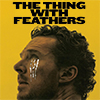 The Thing with Feathers stars Benedict Cumberbatch, as Dad, a grieving widower along with his two sons that navigate life after the sudden death of their mother. Grief is symbolized by a giant crow that mocks and taunts Dad. The Thing with Feathers is based on the debut book by Max Porter, Grief is the Thing with Feathers.
 In a chat with SciFi Vision, director and writer Dylan Southern shared key insights into The Thing With Feathers, his on-set experiences with the cast, the intricate design of the crow puppet voiced by David Thewlis, his personal favorite ‘thing with feathers,’ and more.
The Thing with Feathers opens in theaters today.
Watch the interview and read the transcript below.
DYLAN SOUTHERN: It was an absolute joy to work with the cast, you know, particularly Benedict. This is my first film, my first narrative feature, and I was working on a really small indie film, low-budget indie film, and I never expected to get an actor like Benedict to be interested in it. He’s worked with some of the biggest directors in the world, and he's been on the biggest sets in the world with the Marvel films, and he's done Shakespeare, and he's a classically trained actor, and for him to come on board my little indie film was just out of this world.
And at first I was really nervous, I was kind of like, you know, am I going to be able to direct him in a way that he's used to? But he made things so easy for me, we became friends before we even stepped on set. I would go and visit him at his house, and we'd talk about the film, talk about the character, talk about comic books, talk about other films, talk about life, our families, and over time we just formed a bond.
And by the time we got to set, we were partners; it was a creative partnership. So, he took away all that stress and worry I had and taught me a lot and made it so incredibly, you know, such a rewarding working partnership.
And then the other amazing actors on the film, the two young boys, Richard and Henry Boxall, were just a dream as well, you know, not quite as responsive and easy to work with as Benedict, because they'd never acted before. You know, I chose them because of who they were as characters, these two wonderful young seven-year-old twins at the time, full of life and full of mischief and a lot to kind of coral and contain into these performances, especially when the film is about the subjects of grief. But I knew I had to take a chance on them, because they just had such amazing character and reality. And, you know, as we progressed through filming, they got better and better, and Benedict, as well as being a colleague to them, he was a tutor to them and sort of helped them with their acting. It was, yeah, it was just a brilliant experience. I kind of wouldn't change anything about it.
SCIFI VISION: The Voice of Crow is played by David Thewlis. Were you able to see him in person? Did he ever come to the set? Was that something that happened after?
 DYLAN SOUTHERN: So, he was always my first choice for The Voice of Crow. When I read the book that the film is based on, and when I was writing the script, it was always David Thewlis's voice in my head, and I would have been so upset if he'd have said no. But first time I went to visit him in his house, he invited me in, and we sat down, and I noticed behind him was a taxidermy crow, a stuffed crow. So, I thought, that's a sign. And he said yes pretty much straight away as well. Originally, he was going to be on set just feeding the lines in off set, but he had a scheduling conflict so he couldn't do it.
So, the actor who physically played Crow did the lines on set. And then afterwards, we had two or three long sessions in a recording studio where David just brought Crow to life, and that was probably my most enjoyable part of making the film was just sitting on a sofa and listening to David just riff on these lines that I'd written. And we did so much additional stuff that my dream was to put all of Crow's outtakes onto a vinyl and have that so if people wanted to kind of be insulted, they could put it on their record player at home.
SCIFI VISION: That's fantastic. Now with the Crow, there's definitely a design decision here. With so much CGI in film, you decided to make it more human-like and not do CGI. Can you tell us about that decision?
DYLAN SOUTHERN: Yeah, I mean it was an easy decision, because I couldn't see Crow as being CGI. I wanted him to be a real physical presence, and I think that's because of the movies I grew up watching in the 90s. You know, I love creature features and things that use practical effects. I think from a performance point of view, I wanted the two young boys to have something there in front of them that they could play off, and I wanted Benedict to have something there that he could interact with.
And from a selfish point of view, I love the process of working with other people. And in creating Crow, I could bring in people from the world of fine art and comic books and people who had worked on, you know, Creatures Inc. who made the costume.
Conor O'Sullivan had worked with Ridley Scott on Alien Covenant. And from a film geek point of view, I got to see all of these artists that I admire contribute something to the creation of Crow. Yeah, it just was incredible.
You know, Nicola who designed him is a sculptor who's incredible. She makes these huge sculptures that are half man, half beast made with organic materials like clay and straw and then cast in bronze, and I always loved her work. And when I was writing the script, I was like, “This has to be a Nicola Hicks design.” And thankfully, she said yes when I met her, and then we had to figure out how you take this design, this spindly crow with little legs and, you know, this fearsome kind of head and make that practically wearable, which is where Conor came in.
And then we had an actor called Eric Lampaert, who's a brilliant physical actor who's trained in mime and animal studies and clowning, who brought Crow to life physically.
And then the fourth element was David's voice, which is sort of repulsive and compelling at the same time. Yeah, so Crow's this singular character who's the result of many, many different artist’s work. And that's one of the things I loved about making this film was that I could bring people who are sort of, whose talents I could never hope to have to create something special.
SCIFI VISION: Now, there's a couple of scenes that stood out of the fight scene between the Crow and the demon and Benedict's character. I don't know if I have this right, but he's just named Dad?
DYLAN SOUTHERN: Yes. That’s all he is.
SCIFI VISION: Sad Dad, too. Can you tell us a little bit about the making of that scene?
DYLAN SOUTHERN: Yeah, I mean, we had to change that scene very late in the day. It comes from a chapter in the book. Actually, in the book, it happens on the street outside the house, but we were shooting in February in London, and it was freezing temperature conditions, freezing weather conditions, and we couldn't have like two young boys and the whole cast and crew out on the street doing it. And I think there was some budgetary issues as well.
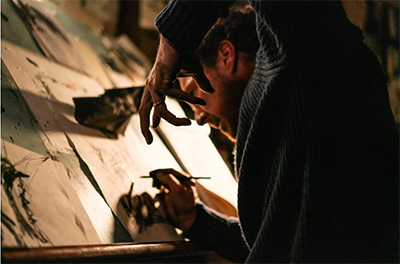
So, late in the day, I had to rewrite the scene to happen inside the apartment, which was the best thing that happened, because it was at the end of shooting on the apartment set, and it meant we could destroy the set. So, we kind of had, Dad's an artist, so he had ink pouring down the walls and pouring down the stairs, and we had Dad being thrown through the ceiling of the flat, and it made it really kind of intense and over the top and visceral, because it sort of represents internally this big fight with Dad, what's going on inside him in terms of like his grief spilling over into despair. And, you know, it was directly taken from the book but changed to kind of fit the design of the film, and it was super fun to shoot.
It was stressful, because, you know, as I said, we're a low budget film, and I think we had one and a half days to shoot that whole sequence. And I think in a bigger budgeted film, you'd probably shoot that over like a week or longer, but it was, just I loved the chaos of it. It's messy, and it's chaotic, and it's imperfect, and, you know, this is a film that I wanted to be visceral and for you to feel rather than think about too much. And I think, in that moment, that fight as sort of messy and chaotic as it was, was not only was it fun to shoot, it really kind of fits that moment in the film.
SCIFI VISION: Well, the other scene that I just wanted to say, I do like kind of like the break of the scene where he is drinking, dancing and screaming. Kind of a lightness to that scene. But we're almost [out of] time, but do you have a favorite thing with feathers?
DYLAN SOUTHERN: Do I have a favorite thing with feathers?
SCIFI VISION: Yes.
DYLAN SOUTHERN: Big Bird.
SCIFI VISION: And then if there was anything, and you're doing a lot of, you know, interview press, if there's anything that you haven't been able to share with anybody about The Thing with Feathers that as the writer and director, you'd love to share?
DYLAN SOUTHERN: Only that I would encourage people once they've seen the film to go back to Max's book, because, you know, obviously a film does what a film can do, but in Max's book, there's so much nuance, and there's so much surprising detail. I think if the film draws people's attention to Max's work, who haven't read it, then that's great, because he's such a brilliant writer, and I'm so thankful for him to allowing me to play with his world and his characters.

Latest Articles
Interviews
 Spider-Noir: Hnedel Maximore Breaks Down the Emmy-Nominated Visual Effects
 Wednesday, 05 August 2026
 Foundation: Chris MacLean on Building the Show's Epic VFX, The Emotional Season Finale & More
 Tuesday, 04 August 2026

 Summer's Last Resort: Jerry O'Connell, Sophia Bush & Violet McGraw on Comedy, Chaos & Water Park Fun
 Friday, 03 July 2026

 FROM Stars Nathan D. Simmons and Kaelen Ohm on Their Characters' Emotional Exits
 Tuesday, 30 June 2026
 Spider-Noir: Lukas Haas on Costume, Old-School Noir Inspiration, and Working with Nicholas Cage
 Monday, 29 June 2026
 FROM Star Pegah Ghafoori on Fatima's Transformation, Fan Theories & What's Next
 Monday, 29 June 2026
 Ron Perlman on Playing Dead, Facing Noah Pierson, and More in The Capture Season 3
 Tuesday, 23 June 2026

Reviews


